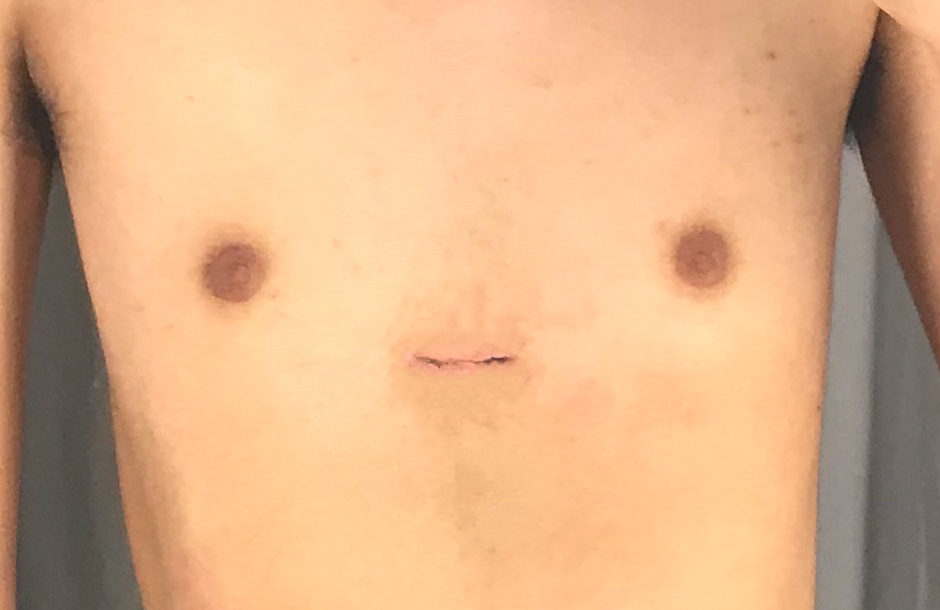
Pectus Excavatum Baby Pictures. It is often present at birth but. Severe cases of pectus excavatum can eventually interfere with the function of the heart and lungs. This causes a depression of the sternum and the chest has a “sunken in” or “funnel chest” appearance. See more ideas about pectus excavatum, heart and lungs, cody miller. Pectus excavatum can range from mild to severe, and your child may or may not have symptoms related to the heart or lungs. Baby looks very similar to u/s pictures done at 20 weeks when we found out about his enhanced. Surgery can correct the deformity. It has a male predominance, with a ratio of 3:1 male to female. Pectus excavatum is a condition in which, instead of being level with the ribs, the breastbone (sternum) is ‘sunken’ so that the middle of the chest looks ‘caved in’. She was around 4 months old, and in the bathtub. The depression may be in the center of the chest or more pronounced on one side. The cartilage pushes the breastbone (sternum) inward. Also called funnel chest, pectus excavatum is more common in boys than in girls. Symptoms of pectus excavatum in kids. Pectus excavatum, also referred to as “sunken chest,” is a depression in the chest wall.
Testimonies of patients operated on with Pectus Up from pectusup.com
You can see it fairly well in these pictures. It is found in one in 400 live births. This causes a depression in the chest that can range from mild to severe. It can either be present at birth or not develop until puberty. It has a male predominance, with a ratio of 3:1 male to female. Pectus excavatum is the most common chest wall deformity, occurring in about one in 500 children and accounting for more than 90 percent of congenital chest wall deformities. It is often present at birth but. This causes a depression of the sternum and the chest has a “sunken in” or “funnel chest” appearance. The average cost of the pectus excavatum cat surgery is $800. Pectus excavatum is a congenital chest wall deformity that is caused by growth abnormality of the cartilage that connects the ribs to the breastbone (sternum).
With Pectus Excavatum, The Sternum Goes Inward To Form A Depression In The Chest.
This blog is for all the women out there who have pectus excavatum. Also known as “sunken chest” or “funnel chest,” pectus excavatum can be corrected with the minimally invasive surgical technique called the nuss. This medscape article describes it as follows: Pectus excavatum affects about one in 1,000 children and is four times as common in boys as in girls. For others, it may affect their heart or lung function. Pectus excavatum is where the sternum and ribs develop abnormally, causing the sternum to drop inward toward the spine and produce a caved in or sunken appearance of the. If kids are born with pectus excavatum, it might not be noticeable at first. Pectus excavatum is an abnormal development of the rib cage in which the sternum (breastbone) grows inward, resulting in a noticeable and sometimes severe indentation of the chest wall. Symptoms of pectus excavatum in kids.
Pectus Excavatum, Also Known As Sunken Or Funnel Chest, Is A Congenital Chest Wall Deformity In Which Several Ribs And The Sternum Grow Abnormally, Producing A.
P.e (meaning hollowed chest) is the most common congenital deformity of the anterior wall of the chest, in which several ribs and the sternum grow abnormally. Surgery can correct the deformity. Pectus excavatum.say that 3 times fast. The condition affects more boys than girls. The depression may be in the center of the chest or more pronounced on one side. A genetic predisposition to pectus excavatum has never been defined, although there. Usually, the ribs and sternum go outward at the front of the chest. See more ideas about pectus excavatum, heart and lungs, cody miller. Pectus excavatum, also known as concave chest or funnel chest, is a deformity of your child's chest wall.
The Breastbone, Or Sternum, And Some Of The Ribs Grow Abnormally, Causing A Depression In The Middle Of The Chest.
Both or just one side of the breastbone may be affected. Chest pain related to abnormal bone and cartilage growth. This causes a depression in the chest that can range from mild to severe. One of the symptoms may be if your baby is crying very often for no particular reason. Pectus excavatum is the most common chest wall deformity, occurring in about one in 500 children and accounting for more than 90 percent of congenital chest wall deformities. It has a male predominance, with a ratio of 3:1 male to female. Pectus excavatum is a congenital chest wall deformity that is caused by growth abnormality of the cartilage that connects the ribs to the breastbone (sternum). The average cost of the pectus excavatum cat surgery is $800. Pectus excavatum is a congenital deformity of the chest wall that causes several ribs and the breastbone (sternum) to grow in an inward direction.